No-shows cost UK service businesses real money every week. A missed hair appointment, an empty slot with a cleaner already en route, a tradesperson who turned up to find nobody home. A clear deposit and booking fee policy is one of the most effective ways to protect your income, filter out time-wasters, and signal to good clients that your time has value. This guide explains the difference between deposits and booking fees, how to write a policy that holds up, how to ask for payment without sounding awkward, and which tools actually support it.
Is a Booking Fee the Same as a Deposit?
Short answer: not quite, though people use the terms interchangeably. The distinction matters if a client ever disputes a charge.
A deposit is a partial payment towards the total cost of the service. If a client books a £120 cut and colour and pays a £30 deposit, that £30 comes off the final bill. It is theirs, applied to what they owe you.
A booking fee (sometimes called a holding fee or non-refundable fee) is charged purely to secure the slot. It may or may not be credited against the final invoice, depending on how you set your terms. Many salons and freelancers use a non-refundable booking fee precisely because it covers the cost of holding and then losing that slot.
In practice, the most common approach for service businesses is a partially refundable deposit: you take, say, 20 to 30 per cent upfront, credit it against the job if the client shows, and keep it if they cancel inside your cancellation window. This is fair, easy to explain, and legally straightforward under UK consumer law provided your terms are clear before the client pays.
Why Service Businesses Are Asking for Deposits Now
A question that comes up a lot in Facebook groups and trade forums is: 'Why are hair salons suddenly asking for a deposit for a cut and colour?' The honest answer is that they always should have been, and post-pandemic no-show rates made ignoring the problem impossible.
A colour appointment can block three hours of a stylist's time. A no-show on that slot does not just lose the revenue for that booking. It loses the clients who could have filled it, the cost of colour product already mixed, and the stylist's wages that still need paying.
The same logic applies to mobile cleaners, plumbers, personal trainers, tattoo artists, and virtually any trade or service where time is the product. A £50 deposit is not greed. It is basic business protection.
Clients who genuinely intend to show up are rarely put off by a reasonable deposit. The ones who push back hardest are often the ones most likely to cancel at the last minute.
How to Structure Your Deposit Policy
Keep it simple. Complicated policies confuse clients and are harder to enforce. Below is a structure that works for most service businesses.
Deposit amount: 20 to 50 per cent of the service value. Higher for long appointments or bespoke work (e.g. wedding hair, custom tattoos, large landscaping jobs).
When it is taken: at the time of booking, not later. Chasing a deposit after the fact almost never works.
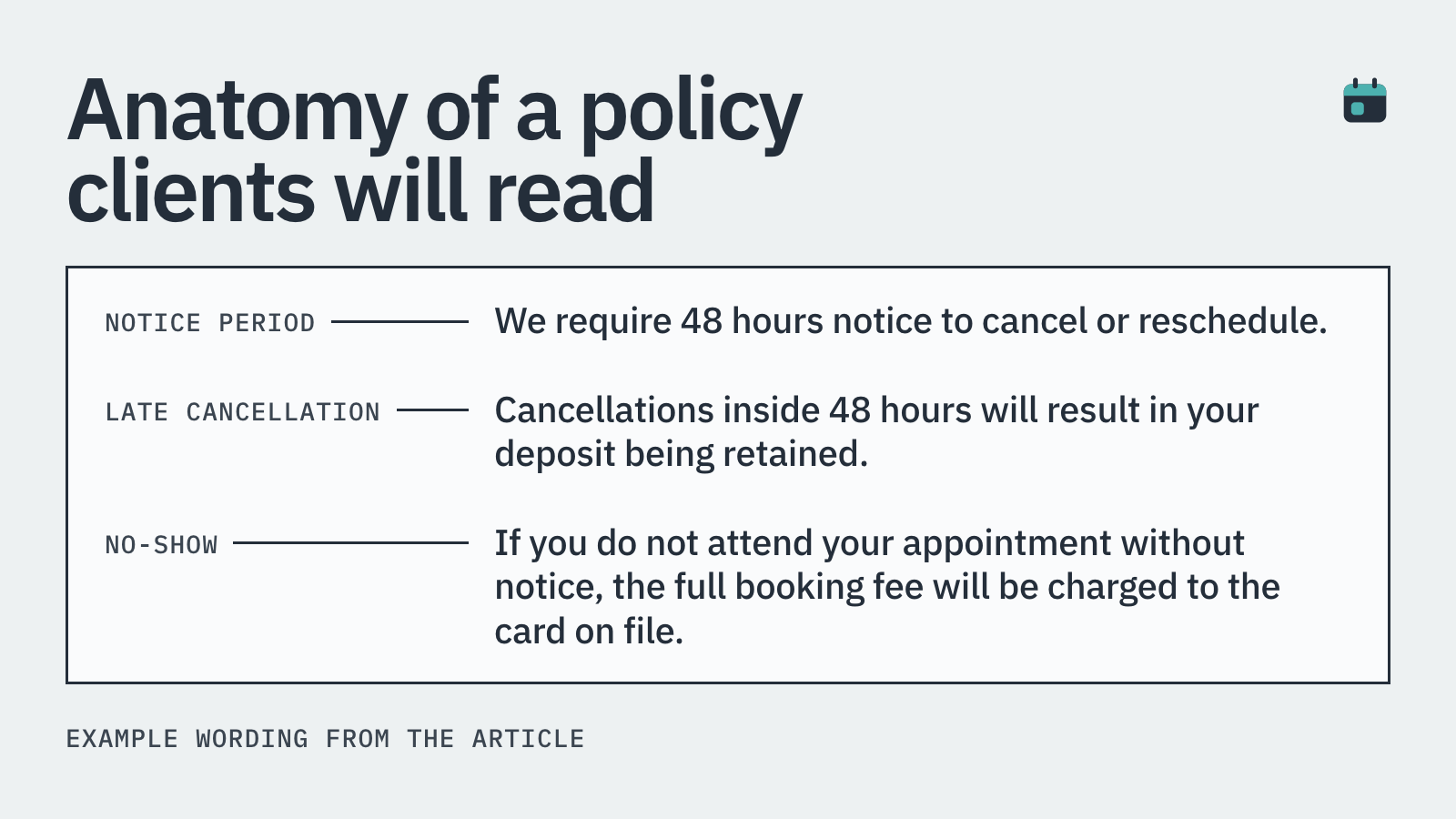
Refund window: state clearly how many hours or days before the appointment a client can cancel and receive a refund. 48 hours is a common minimum.
Inside the window: deposit is forfeited. Some businesses also charge a percentage of the remaining balance for very late cancellations or same-day no-shows.
Rescheduling: decide whether deposits transfer to a rescheduled appointment. Most businesses allow one free transfer; this keeps goodwill without being a loophole.
Where clients can read the policy: link to it in the booking confirmation email and display it clearly on your booking page.
How to Ask for a Deposit Politely
This is the part most business owners worry about. The good news is that framing matters far more than the act of asking.
Avoid language that sounds apologetic. Saying 'Sorry, I hope you don't mind, but I just need a small deposit...' signals that you are not confident in your own policy. State it matter-of-factly, the way a hotel or dentist would.
Here are a few scripts you can adapt for your own business:
Booking confirmation message: 'To secure your appointment, a deposit of £[X] is required at the time of booking. This is deducted from your final balance. Cancellations made with less than 48 hours' notice will forfeit the deposit.'
When a client questions it by phone or message: 'We take a small deposit to hold your slot. It comes straight off your final bill, so you are not paying any extra. If you need to cancel, just give us 48 hours and we will refund it in full.'
For high-value or bespoke work: 'Because we reserve a significant block of time and purchase materials in advance for your appointment, we ask for a 50 per cent deposit upfront. The balance is due on the day.'
For existing, trusted clients: 'We have updated our booking policy and now take a deposit for all new appointments. It is the same deposit that comes off your bill at the end.'
Card-on-File vs. Upfront Deposit: Which Is Better?
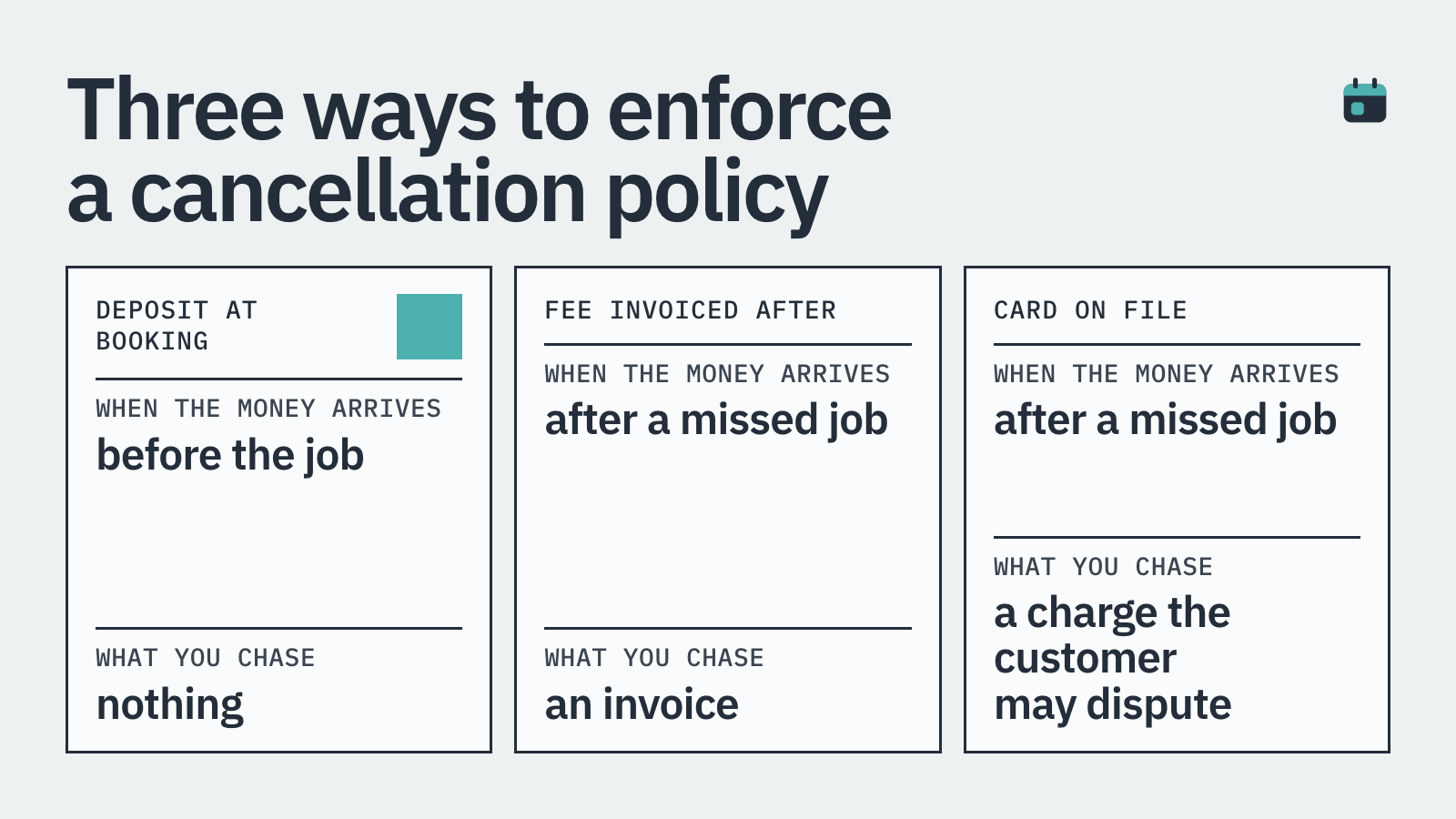
Some businesses prefer to store a card rather than charge a deposit. The client's card is saved at booking and charged only if they no-show or cancel late. This feels less friction-heavy for the client but carries a real risk: disputes are far more common when you charge after the fact, because the client did not hand over money consciously.
An upfront deposit has a psychological advantage. The client has already committed money. That act alone significantly reduces the chance they will ghost you.
Card-on-file works well as an add-on layer, for example charging the remaining balance automatically after a job is complete, but it should not be your only no-show protection. The upfront deposit is more reliable.
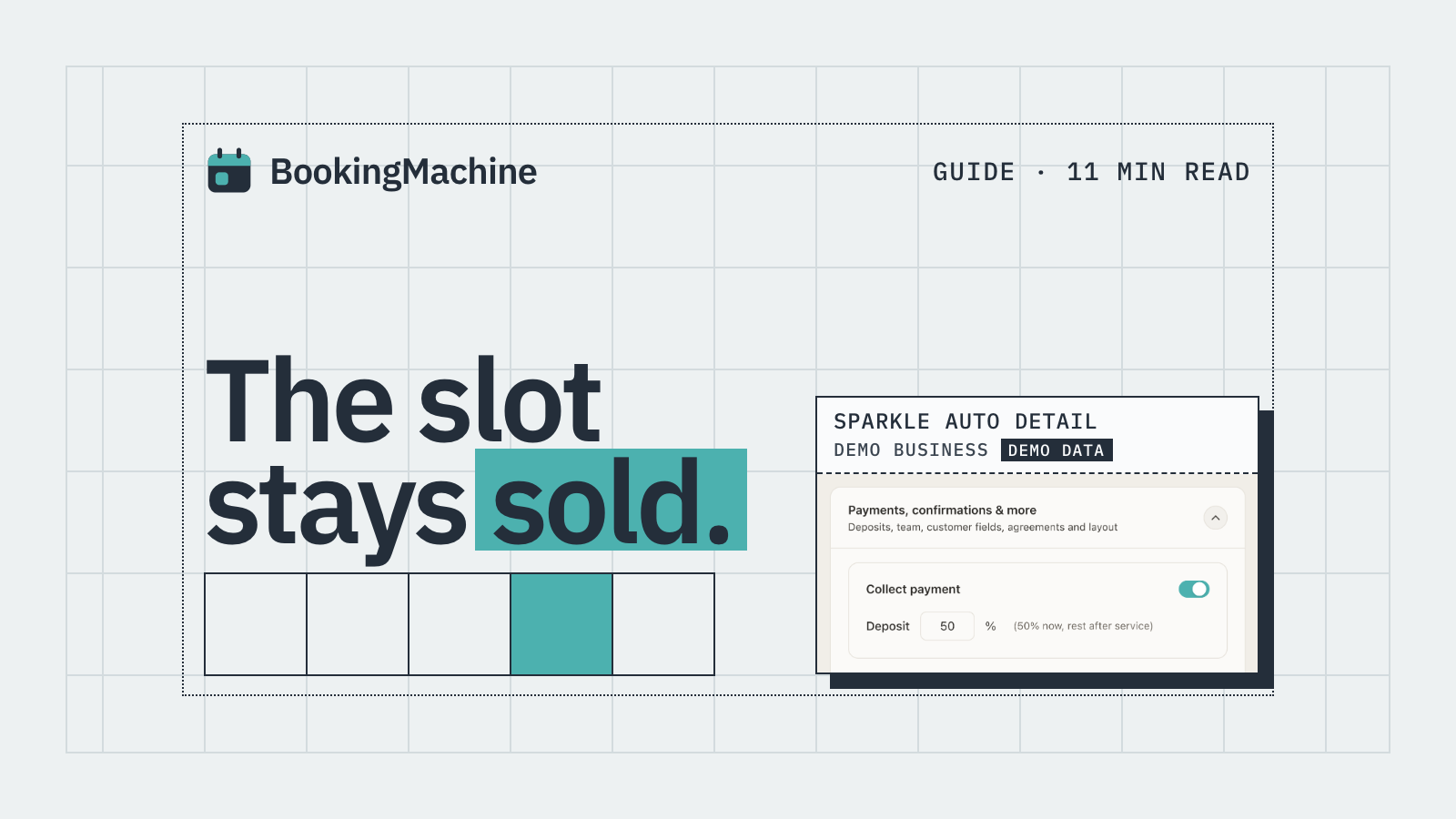
Some booking tools, including BookingMachine, support both: collecting a deposit at booking and keeping a card on file for the balance or any late-cancellation fees. That combination gives you the clearest protection.
What Your Policy Should Say (and Where to Put It)
A deposit policy only protects you if the client has clearly seen and accepted it before they pay. Buried terms in a PDF nobody reads will not hold up if a client disputes a charge with their bank.
Put your policy in these places as a minimum:
On your booking page, above the payment step, in plain English.
In the booking confirmation email or SMS, with the key points summarised (not linked to a 10-page PDF).
On your website's FAQ or pricing page.
In any direct message or quote you send before a client books.
Choosing a Booking Tool That Actually Supports Deposits
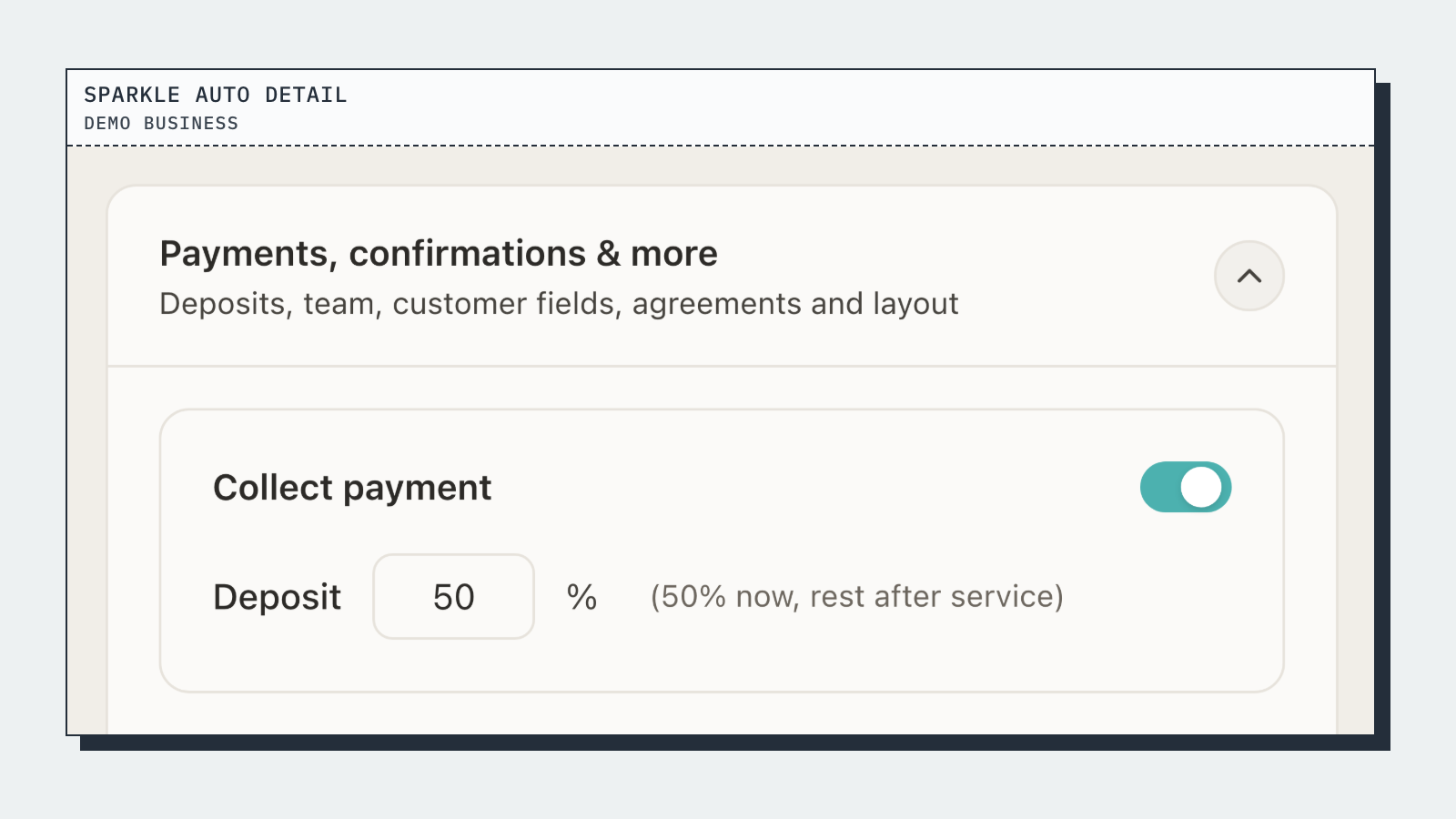
This is where a lot of service businesses hit a wall. They have a solid policy in their head but no way to collect the deposit automatically at the point of booking.
Calendly is the best-known scheduling tool, but it is built for meetings, not service bookings with payments. Its deposit functionality is limited, and it does not have no-show protection built for trades or salons. Acuity Scheduling has payment options but its deposit logic is rigid and it can feel overly complex to set up for simple service businesses. Square Appointments is a solid option if you are already in the Square ecosystem, though its cancellation fee enforcement requires card-on-file and is not always intuitive.
BookingMachine is built specifically for service businesses: cleaners, tradespeople, salons, mobile therapists, freelancers. It takes a deposit at the point of booking, stores a card on file for the balance, and enforces your cancellation policy automatically. You do not need a separate payment processor or a workaround. The client books, pays the deposit, and your slot is protected.
After the job is done, BookingMachine sends an automated review request by text, including a link that lets the client upload photos or a short video review. Those reviews can display directly on your site, which helps convert the next client who is weighing up whether to book.
Common Mistakes to Avoid
Even businesses with a policy in place often undermine it in practice. Watch out for these:
Waiving the deposit for regulars as a favour, then resenting them when they cancel. Apply the policy consistently or do not bother having one.
Setting the deposit too low to sting. A £5 deposit on a £200 job stops nobody. Aim for at least 20 per cent.
Not stating the refund window clearly. Vague terms ('reasonable notice') lead to arguments. Use a specific number of hours or days.
Collecting the deposit by bank transfer instead of card. Manual transfers create admin, delay, and no protection against disputes.
Forgetting to mention the policy at the first point of contact, then trying to enforce it later. Lead with it.
How it compares
| Feature | BookingMachine | Calendly | Acuity Scheduling | Square Appointments |
|---|---|---|---|---|
| Built for service businesses | Yes | No (meetings focus) | Partial | Partial |
| Deposit at time of booking | Yes | No | Limited | Yes |
| Card-on-file for balance | Yes | No | No | Yes |
| Cancellation policy enforcement | Yes, automatic | No | Manual | Partial |
| Automated review requests (text, image, video) | Yes | No | No | No |
| Embeds on your own website | Yes | Yes | Yes | Limited |
| No-show protection built in | Yes | No | No | Partial |
Is a booking fee the same as a deposit?
Not exactly. A deposit is a partial payment that is credited against the final bill. A booking fee is charged to hold a slot and may or may not be credited, depending on your terms. Both are valid; just make your terms clear before the client pays.
How much deposit should I charge?
Most service businesses charge 20 to 50 per cent of the service value. Use the lower end for shorter, lower-cost appointments and the higher end for long or bespoke work where you are committing significant time or materials upfront.
How do I ask for a deposit without sounding rude?
State it as standard practice, not an apology. Something like: 'We take a deposit of £[X] to secure your booking. It comes off your final bill, and you can cancel free of charge with more than 48 hours' notice.' Confidence in your own policy puts clients at ease.
Can I keep a client's deposit if they cancel?
Yes, provided your cancellation policy was clearly communicated and agreed to before payment. Under UK consumer law, a non-refundable deposit is enforceable when the terms are transparent and proportionate. Hiding terms in small print weakens your position.
Why are salons asking for deposits now?
No-show rates increased sharply after the pandemic and have not fully recovered. A colour appointment can tie up three hours of a stylist's time. One no-show can wipe out a significant part of the day's takings. Deposits filter out clients who are not genuinely committed.
Does Calendly support deposits?
Calendly has basic payment options but it is designed for meeting scheduling, not service bookings with deposits and no-show protection. If you need to take a deposit at booking and enforce a cancellation policy, a tool built for service businesses, like BookingMachine, is a better fit.
What is card-on-file and should I use it?
Card-on-file means storing a client's card details at booking and charging it only if they no-show or cancel late. It works as an extra layer of protection but is less reliable than an upfront deposit, because clients are more likely to dispute a charge they did not consciously make. Using both together gives you the strongest protection.
How do I handle clients who refuse to pay a deposit?
Be polite but firm. Explain that the policy applies to all bookings. Most clients who refuse a reasonable deposit either have a history of cancelling or were never serious about booking. Holding your policy consistently protects you and rewards clients who do commit.
Start Taking Deposits at the Point of Booking
BookingMachine is built for service businesses that are serious about protecting their time. Take deposits upfront, keep a card on file, enforce your cancellation policy automatically, and collect photo and video reviews after every job. No workarounds, no duct-taped tools.